Shoe shopping in Madrid

The Spanish make some fabulous shoes; quality leather, good craftsmanship and contemporary design. I know because I used to be a footwear buyer. But walking the tourist trails in Madrid, I didn’t come across a single trendy footwear store.

There were plenty of shoe shops, but none selling the edgy, fashion-forward styles I was looking for. I knew there must be a location selling such shoes, but my quick peruse online before I arrived, and inquiries from my hotel in Madrid, didn’t come up with any leads.

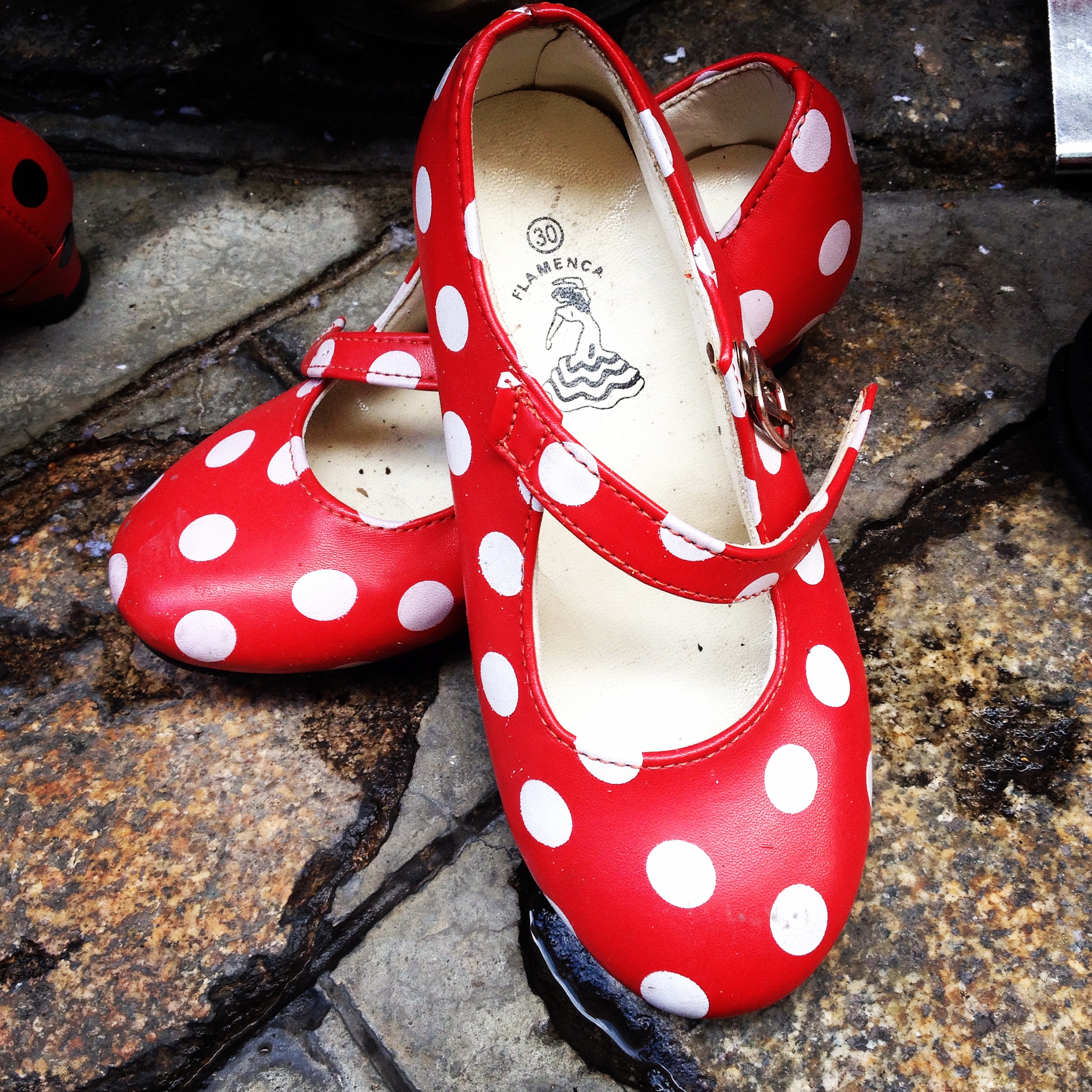
Cute children's Flamenco-inspired shoes

Cute children’s Flamenco-inspired shoes

It was my first trip to Madrid, and with only one day to explore, I couldn’t afford to waste precious sight-seeing time searching for a shoe district I wasn’t sure existed.

Consequently, it was with mixed feelings I read Kate Wickers’ article in the Weekend Australian Travel & Indulgence section on my return home. In her article The Perfect 10: Madrid number four is entitled Shoe Shuffle, and has exactly the information I was after.

So if you are heading to Madrid and looking for fashion footwear, read the article here. As Kate says, “Whoever came up with the idea of putting all the discounted designer shoe shops on Calle de Augusto Figueroa was a genius.” The irony is, I did make a quick visit to the Chueca area, I just didn’t make it to the relevant street.

Fun, black and white wedges I picked up in Seville

Fun, black and white wedges I picked up in Seville

But I didn’t come home completely empty-handed (perhaps that should be un-shod). I did pick up a couple of pairs of shoes on my travels through Andalusia – just not what I had been looking for.  I now own a pair of cute, black and white rope-covered wedges, bought on sale for a bargain price, and a pair of embroidered, black satin flats, which make perfect light-weight evening shoes for travelling.

Let me know if you have a favourite shoe shopping district you visit on your travels.

Posted in Fashion, Shopping, Spain, Travel | Tagged , , , | Leave a comment

Last weekend for Bondi sculpture walk

Sculpture by the Sea, Bondi, finishes this Sunday 9th November. So it’s your last chance to see the exhibits, the work of 109 artists.

sisyphus by George Andric. Photo Briar Jensen

sisyphus by George Andric. Photo Briar Jensen

We visited the exhibition this week, together with some friends from New Zealand. As my girlfriend and I wanted to photograph the sculptures at dawn, we decided to stay overnight in Bondi. We booked a two-bedroom apartment at the Adina. Located in Hall Street, it was only a few mintues’ walk to Bondi Beach, and proved the ideal location, with restaurants and cafes close by.

Two-bedroom apartment at the Adina

Two-bedroom apartment at the Adina

Although the sunrise wasn’t spectacular, the sculptures took on ethereal glow in the soft morning light, offering a different photographic perspective to the harsh sunlight later in the day.

We visited the exhibition on Thursday evening and again on Friday morning and were devastated to see one of the exhibits, the boot pool by Ian Swift, had been damaged overnight, presumably by someone standing on it.

the boot pool by Ian Swift. Photos Briar Jensen

the boot pool (before and after) by Ian Swift. Photos Briar Jensen

If you are heading to the exhibition I suggest you go as early as possible as it can get congested during the middle of the day.

currawong by Lou Lambert. Photo Briar Jensen

currawong by Lou Lambert. Photo Briar Jensen


More: http://www.sculpturebythesea.com

We stayed at the Adina Apartment Hotel Bondi with assistance from the management.

Posted in Accommodation, Attractions, Australia, New South Wales, Sydney, Travel News & Events | Tagged , | 2 Comments

A cooking safari dishes up more than food in Cape Town’s colourful Bo-Kaap district

With a history as varied as South Africa’s, it can be difficult for visitors to grasp its complexities during a short stay. Even more challenging is getting a feel for how events have impacted today’s citizens.

One way to get a more meaningful experience is to spend time with locals in their own homes. Many tours incorporate home visits, affording the opportunity to see how the locals live, and being able to chat with them about their everyday lives, while contributing to their often minimal income.

The colourful Bo-Kaap district in Cape Town

The colourful Bo-Kaap district in Cape Town

I did one such tour in Cape Town’s Bo-Kapp district, a cooking safari, which incorporated the city’s rich history with a home cooking lesson, offering a window into the world of a local Muslim family. It was an experience I cherished and wrote about for Discover, the Travellers Choice (travel agents) magazine.

So I was thrilled last week when the story was announced as a finalist in the Australian Society of Travel Writers annual awards for the Best Food Travel Story. As some of you have asked to see the story, I have posted it below.

Although I didn’t win the award (that went to my friend and colleague Christine Retschlag, aka The Global Goddess, for an intriguing story entitled Rough road from prison gate to plate) I was thrilled to be a finalist in the prestigious awards.

Culinary Cape Malay

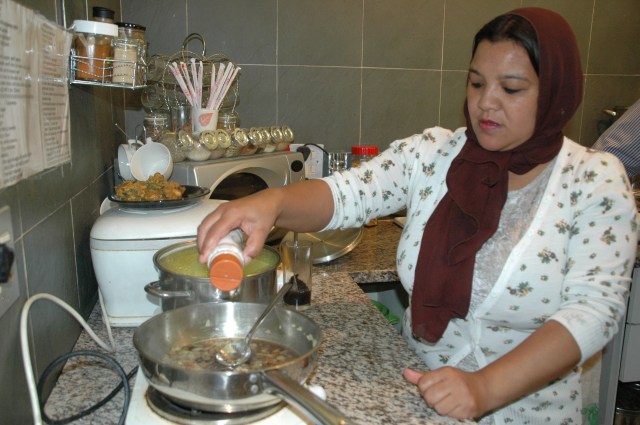
A fragrant mix of sautéed onions, garlic, turmeric and chilli wafts through the small house as I squish slippery minced beef between my fingers. The little kitchen fills with happy banter as we, four guest,s try to recreate the classic dishes we’ve just eaten, under the guidance of head-scarfed Mimoena. I’m making bobotie, the famous Cape Malay dish of spicy beef topped with baked egg.

Mimoena supplements her small wage as a seamstress by hosting visitors in her home for a traditional Cape Malay lunch and cooking lesson; it’s part of a walking tour that opens a window into Cape Town’s Cape Malay district, known for its rainbow-coloured houses and spice trading companies.
Mimoena in her kitchen

Mimoena in her kitchen

The roots of the Cape’s Malay population date back to the 17th century when the Dutch East India Company established Cape Town as a halfway provisioning point on the major trading route between Asia and Europe. Slaves skilled in building, tailoring, gardening and cooking were transported from South East Asia, predominantly Indonesia, Java and Malaysia.

With the emancipation of slaves in 1834, many moved into the Bo-Kaap district, a settlement for disadvantaged communities. Perched on the slopes of Signal Hill with Table Mountain as a backdrop, Bo-Kaap has been listed as a National Monument for its concentration of pre-1840 architecture. Less than two kilometres in extent, the multicultural area is home to about 12,000 people.

Our guide, Shireen, meets us outside the Bo-Kaap Museum, housed in the oldest building in the district. Restored to represent a 19th century Cape Malay dwelling, the museum recounts the social history of the community. Evocative sepia images portray the stories of the building of Cape Town, the slave trade, the growth of Islam and the history of apartheid.

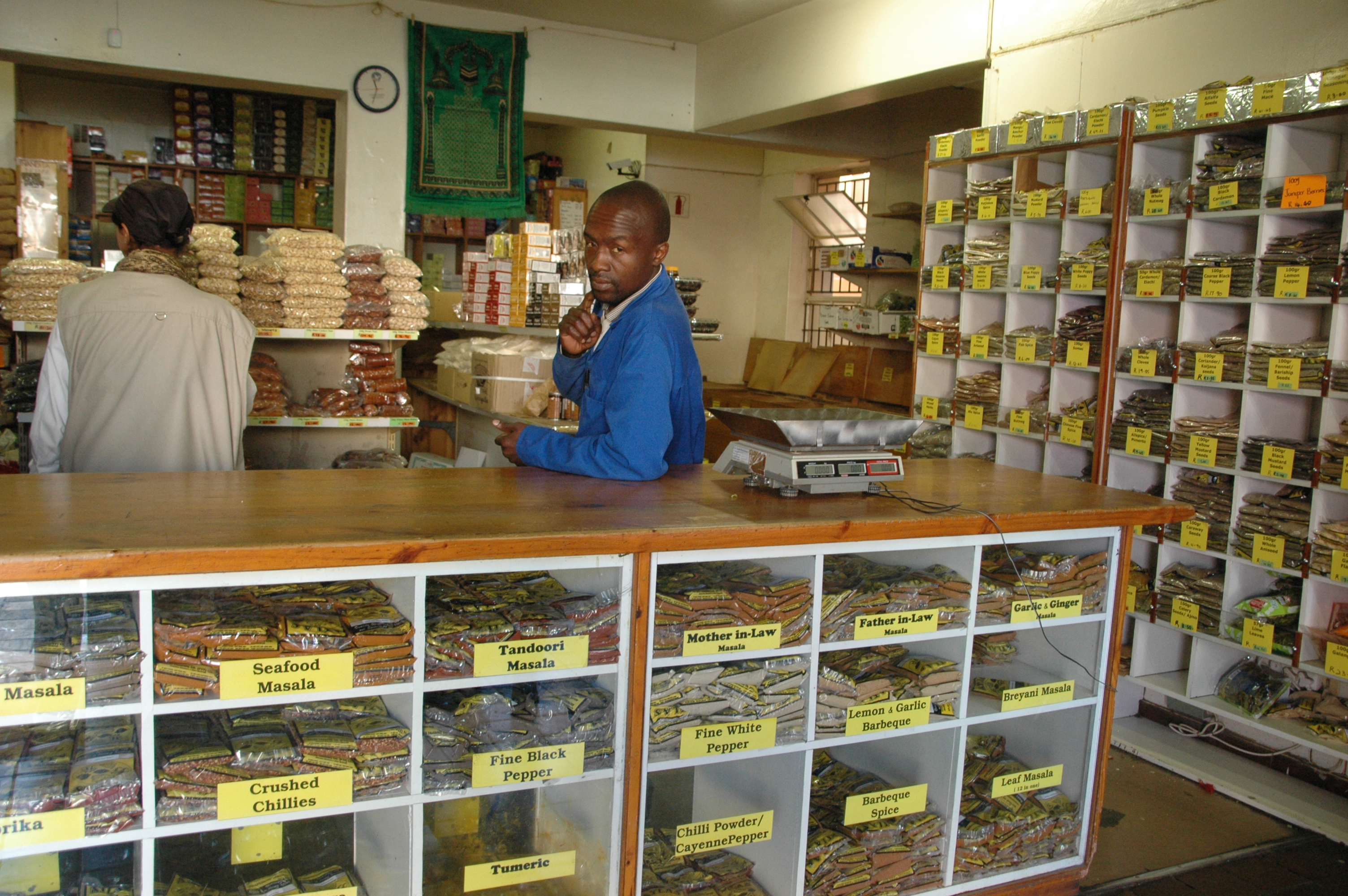
Across the road is the Atlas Trading Company, a third generation spice trading wholesaler. The pungent aroma from the cornucopia of spices wafts into the street.

The Atlas Trading Company

The Atlas Trading Company

Huge timber bins are filled with finely ground spices in earthy shades and russet hues. Shelves are stacked with packets of seeds, lentils, beans, leaves, chillies and rice.  I count 10 different masala mixes – including mother-in-law and father-in-law masala, and get my first whiff of frankincense and myrrh.

Back on the street it’s equally colourful with houses painted in vibrant shades of fuchsia, lavender, jade, sunflower and cobalt. Originally the Cape Dutch and Cape Georgian style houses were painted in pastel tones, it’s only in the last 50 years the colours have become more gregarious with about 15 to 30 houses being repainted every year.

About 70 per cent of the population here is Muslim and mosques are dotted between the houses, including the first mosque built in South Africa in 1794.

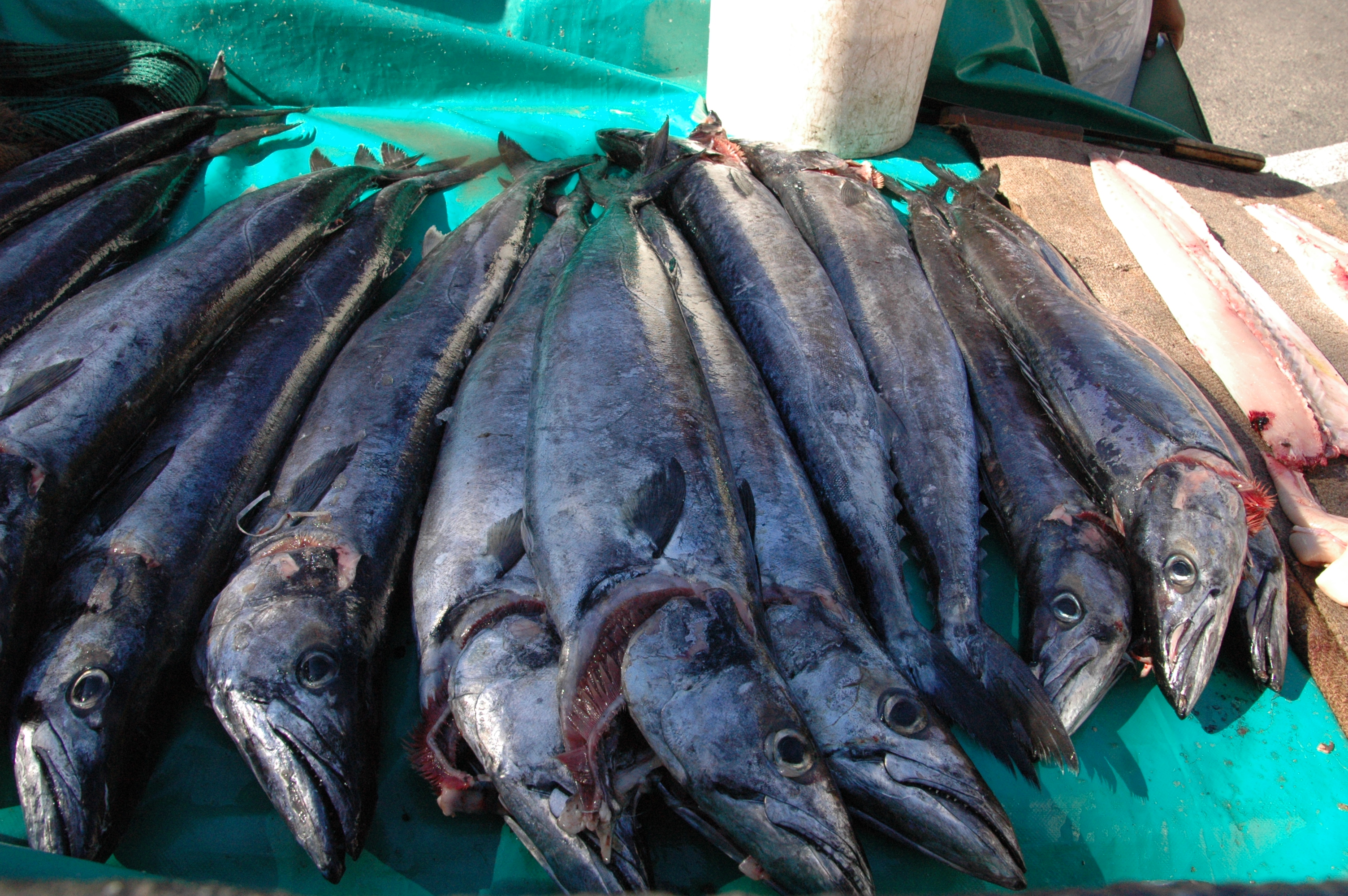
Fish for sale from the back of a ute

Fish for sale from the back of a ute

Arriving at Mimoena’s home she welcomes us into her small lounge where she has set a table for lunch. She serves crunchy samoosas, daltjies (chilli bites), fish curry, vegetable curry, yellow rice and bobotie. Over the shared meal Mimoena describes life in the Cape Malay community and confides how difficult it is for her children to find work in Cape Town.

Then she invites us into her kitchen. A white lace curtain hangs at the window and the bench is lined with pre-prepared ingredients. While Mimoena browns onions on a portable element I squidge soaked bread and myriad spices into washed mince for bobotie. Once that’s in the oven we attempt to wrap samoosas, giggling at our initial incompetence.

I may not remember all the spices for the perfect bobotie, but I cherish the hands-on opportunity to learn about Cape Malay history, culture and food on this inner-city safari.

The writer was guest of South African Tourism.

Did you know? 

Slaves had one day off a year, when they paraded through the streets. To avoid punishment for singing about oppression they had to disguise themselves. Hence, the flamboyant costumes of today’s Cape Town Carnival.

Cooking safari www.andulela.com

Visit www.bokaap.co.za; www.southafrica.net


Posted in Cooking School, South Africa, Travel | Tagged , , , , | Leave a comment

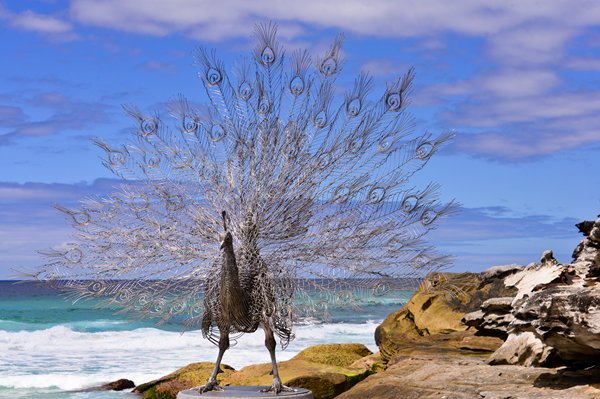
Sculpture by the Sea, Bondi – on now

It’s on again – Sculpture by the Sea Bondi opened Thursday 23 October and runs until Sunday 2 November.

I love Sculpture by the Sea – intriguing, whimsical, inspiring and challenging exhibits set against the stunning backdrop of Sydney Harbour, along the Bondi to Tamarama coastal walk.
Byeong Doo Moon (South Korea) our memory in your place Photo Clyde Yee

Byeong Doo Moon (South Korea) our memory in your place Photo Clyde Yee

I especially admire the way the exhibits fit into, and sometimes interact with, the landscape. The rocky foreshore, a chiseled artwork in its own right, offers a dramatic platform for substantial sculptures and crafty installations – and it means you can usually get a good photograph with the sea in the background without hoards of people in your shot. Sandy beaches and grassy parks are perfect places for playful, interactive pieces too.

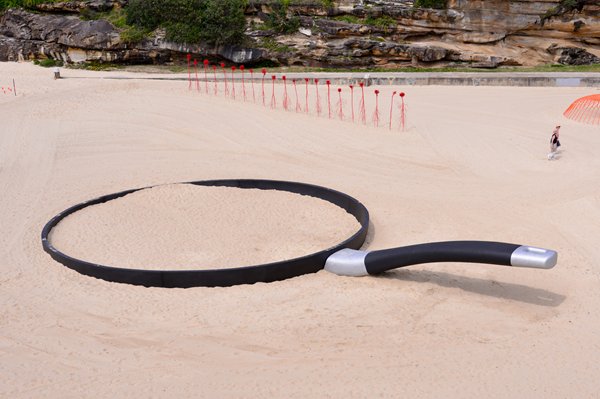
Andrew Hankin We're fryin' out here Photo Clyde Yee

Andrew Hankin, We’re fryin’ out here Photo Clyde Yee

The exhibition has certainly come a long way since it was established in 1997 by a group of volunteers with no funding.

This year there are 109 exhibits from 16 countries. What a difficult job it must have been selecting the exhibitors from the 400 submissions received. It’s encouraging to hear there are 40 artists exhibiting for the first time this year.

Also new this year are two cafes and ‘deckchair and beach umbrella chill zones’, along with disabled toilets.

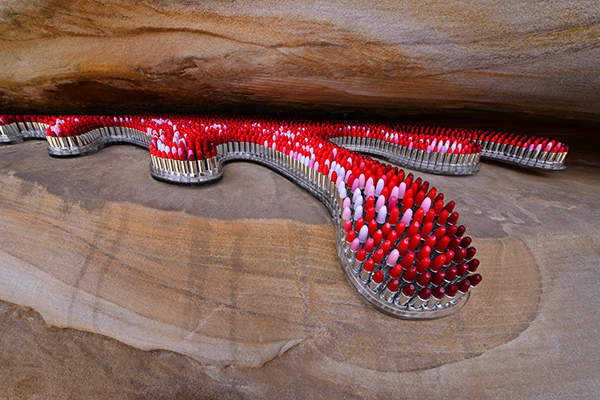
 Linton Meagher (NSW) glamarama, Photo Clyde Yee

Linton Meagher (NSW) glamarama, Photo Clyde Yee

Unfortunately, I can’t visit until the last week (as I’m off to Fiji for the Australian Society of Travel Writers‘ annual convention) but I can’t wait.

I have a friend who’s a keen photographer coming from New Zealand who wants to shoot the sculptures at sunrise. We have booked a two bedroom apartment at the Adina Apartment Hotel in Bondi so we are close to the action. I’ll post again with our photographic results.

In the meantime, check out the stunning shots on the Sculpture by the Sea website and on their social media pages Facebook Twitter and Instagram.


Posted in Attractions, Australia, New South Wales, Sydney, Travel, Travel News & Events | Tagged , , , , , | Leave a comment

Stolen identity? Not this time.

I’m overcome with guilt. How could I have ever thought ill of the three lovely young girls?

The problem is, when travelling you can become paranoid about thieves and scams. And so it is at Bangkok’s Chatuchak Market.

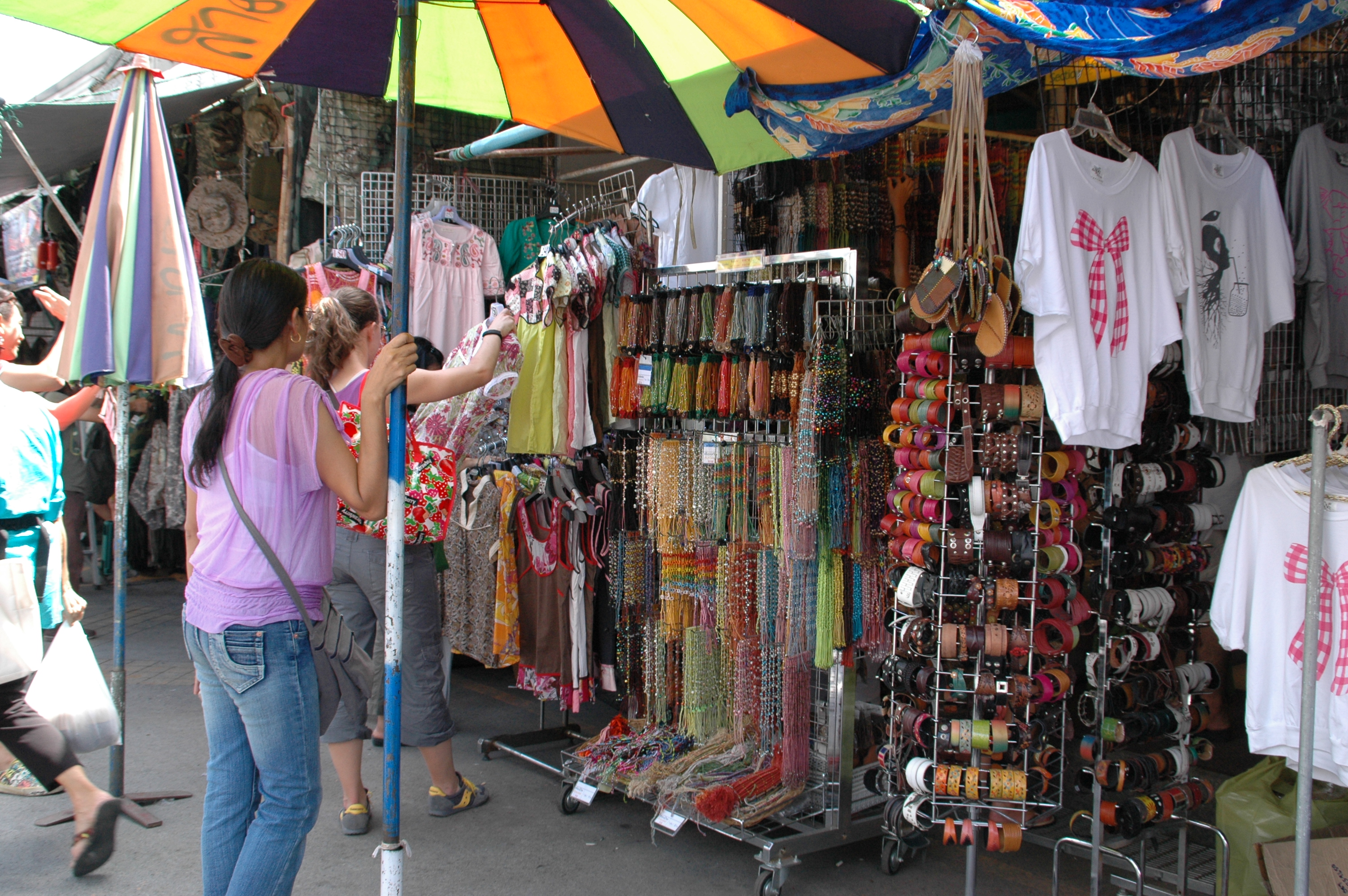
Chatuchak weekend market. Photo Briar Jensen.

Chatuchak weekend market in Bnagkok

Billed as one of the world’s largest weekend markets, with more than 15,000 stalls, it attracts over 200,000 people a day. Selling everything from clothes to collectibles, footwear to furniture, it’s aimed mainly at locals but is a shopping haven for tourists.

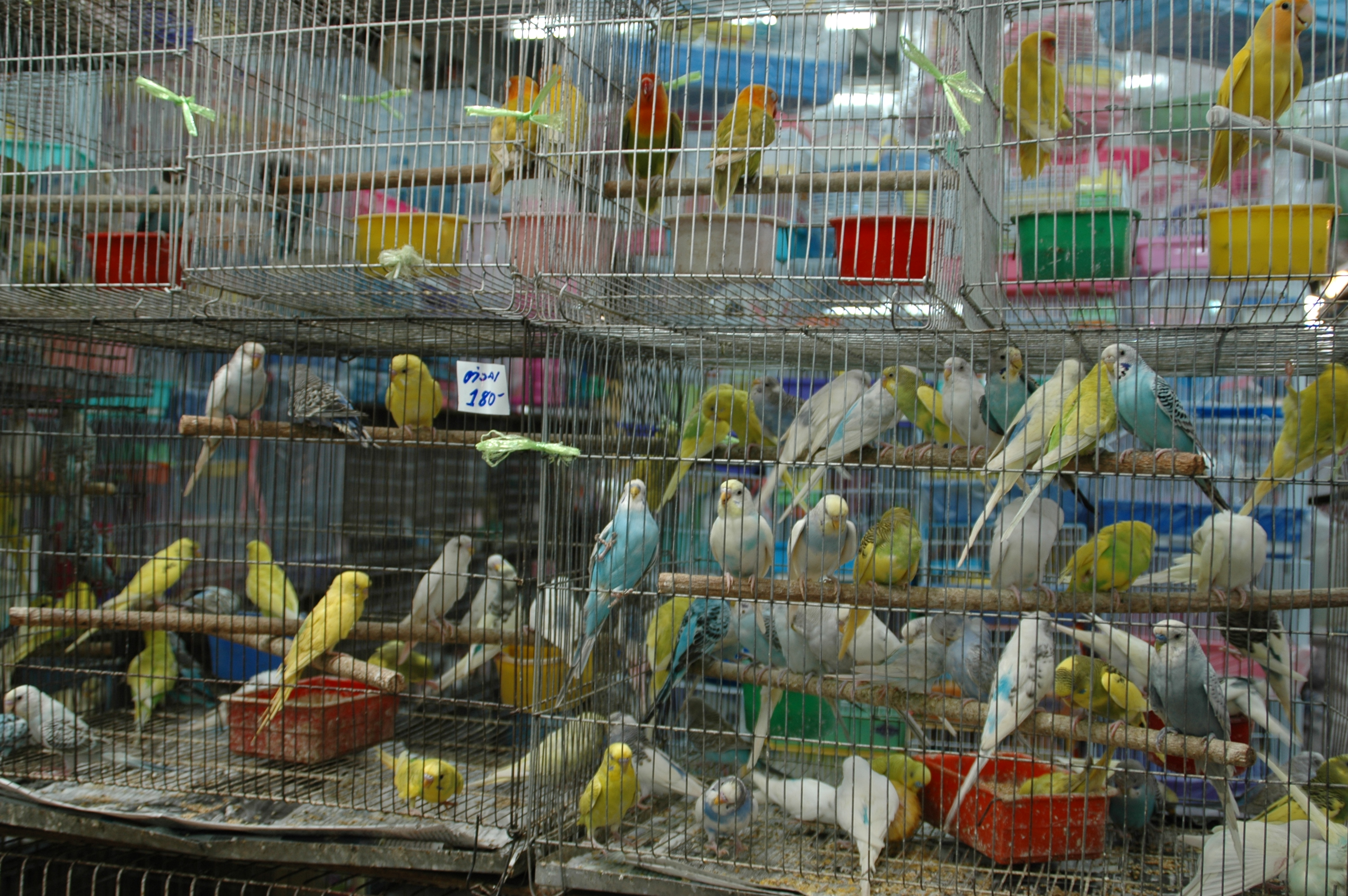
The place is thronging with people. Gaggles of girls peruse the fashions, young couples stock up on homewares, and families choose pets from an array of caged animals.

Thailand1653

Birds for sale at Chatuchak Market, Bangkok

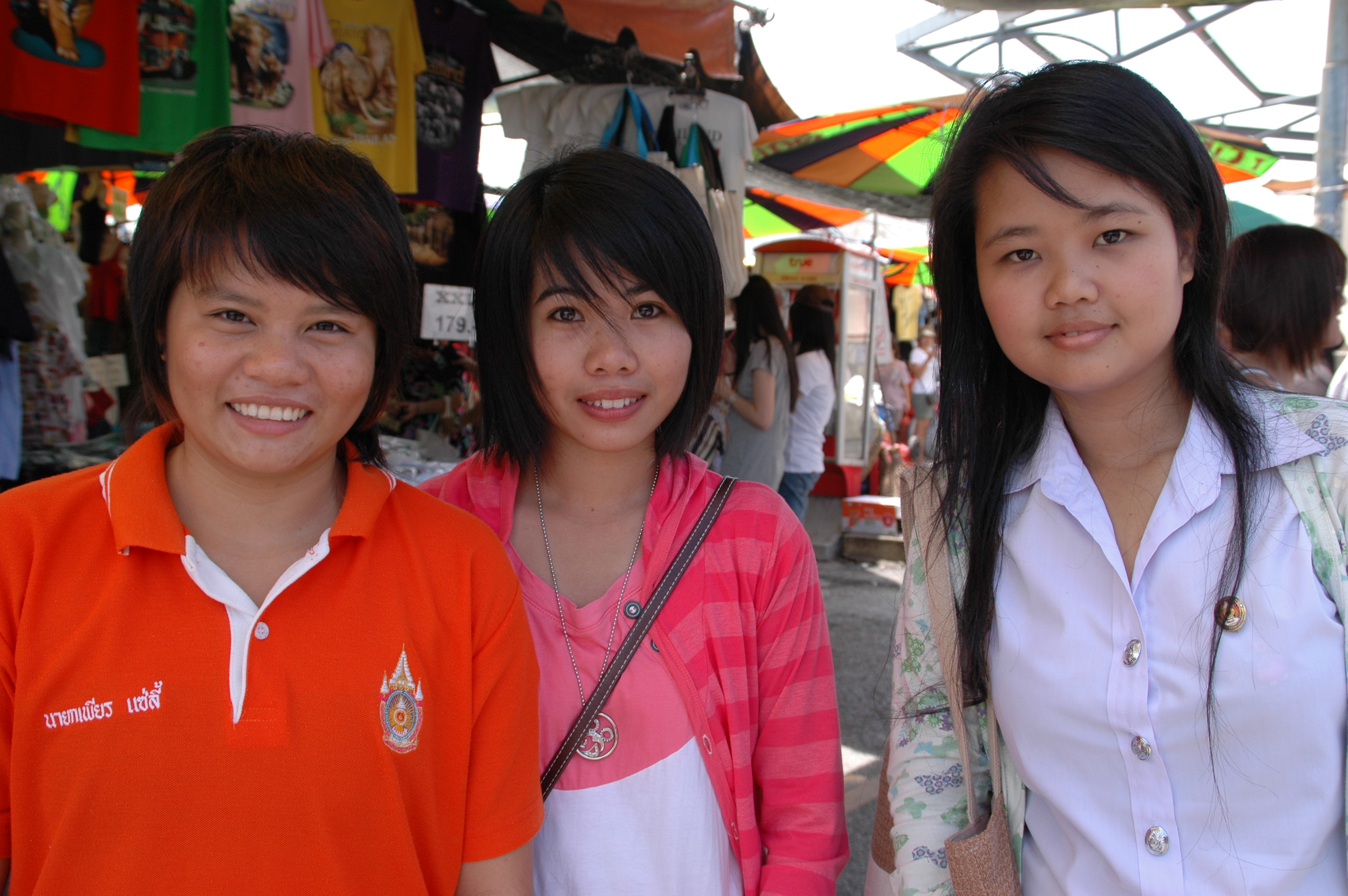
As I walk between stalls I’m approached by three young girls with clipboards. They courteously ask if I would help them with their first-year university English studies by answering a few questions their teacher has prepared.

Why not? I have the time, it’s for a good cause and they asked so politely.

In halting English they ask me my name, trying to write it down as I spell it, but give up and ask me to write it. Then they request my address, phone number and email. Thinking this is getting a bit personal I decline, hoping they will move on to more interesting questions. But the only other question is how long I’ve been in Thailand, before asking to take my photo.

They thank me profusely, indicating the interview is finished.

As I walk away I wonder why they didn’t ask more interesting questions. And why did they want my address and contact details?

A stall-holder at Chatuchak Market, Bangkok

A stall-holder at Chatuchak Market, Bangkok

My thoughts fly back to last night when, at a street bazaar frequented by backpackers, my friends and I had seen a stall selling fake ID cards, from Proof of Age cards to NSW driver’s licences. We’d joked about getting our own Media cards.

Suddenly a wave of nausea washes over me (and it’s not from dodgy food). Have I just had my identity stolen? What if these girls are working for unscrupulous thieves rather than being innocent university students.

I retrace my steps and catch up with the girls exactly where I’d left them, right beside the market security station. I ask them if they would write down their names for me. They oblige. And the name of their university? They write that too. I ask them if I could take their photo and they happily pose for me (but are probably thinking what a weirdo I am).

Somehow having this information makes me feel better, though I have no idea if the names they have given me are correct.

Three young students practise their English skills by interviewing foreigners. Photo Briar Jensen.

Three young students practise their English skills by interviewing foreigners.

Now, over dinner with a local acquaintance I raise my concerns. With a giggle she says the university does exist and confirms that English students regularly interview foreigners at the markets, train stations and shopping centres. She has even done it herself.

Now I feel dreadful for thinking ill of the girls when they were just doing their assignment. I’m sure they would have preferred to be shopping than talking to paranoid foreigners like me.

I’m sorry girls. Please accept my humble apology. And good luck with the English studies!

Hint for university English tutors: Perhaps in these circumstances ‘Where are you from?’ or ‘Where do you live?’ is more appropriate than ‘What is your address?’.

Disclaimer: I travelled to Bangkok as a guest of Tourism Authority of Thailand.

More: Chatuchak Market is open Sat & Sun 6am to 6pm. Closest stations are Kamphaengpecth Station or about a 5 minute walk from Suan Chatuchak (Chatuchak Park) Station (MRT). The closest Skytrain station (BTS) is Mochit. Just follow the crowd. Pick up a map from the information stall below the clock tower, which helps identify specific areas for food, clothing, furniture etc. (However, there are often a few clothes stalls randomly mixed among the food stalls.)  It’s best to get there early in the day as in the afternoon wholesalers set up in the limited walkway space making it even more difficult to get around. Take a decent carry bag or backpack for your shopping, as multiple plastic bag handles can be painful to carry on your arm after a while.

Tourism Authority of Thailand

Posted in Bangkok, Thailand, Travel | Tagged , , , , , | 2 Comments

Teen-friendly family accommodation on the Gold Coast

Finding accommodation that suits a family with teens can often be challenging. You want to give them some freedom and a room of their own, especially if they are older, but you also want to have them close and know their comings and goings.

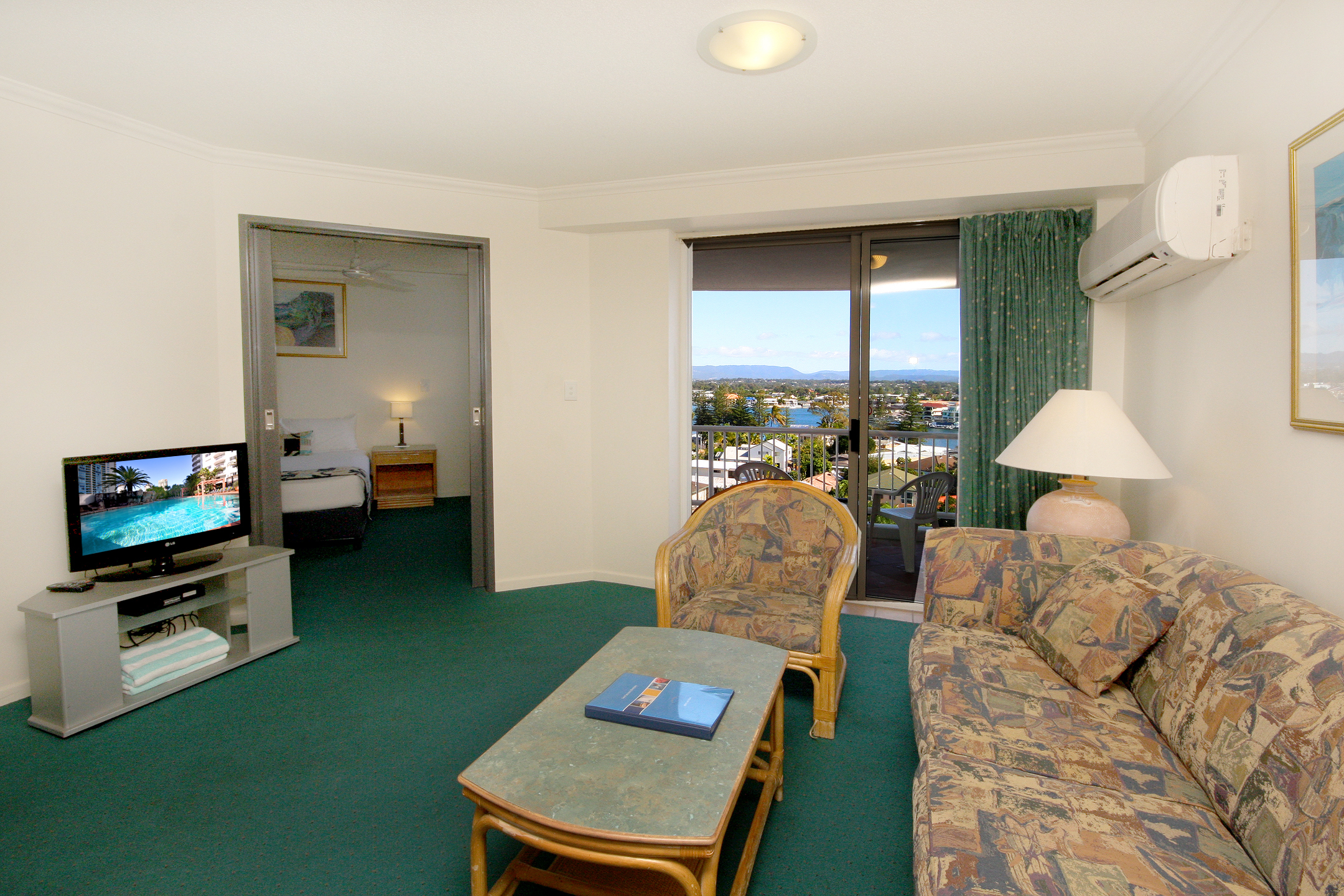
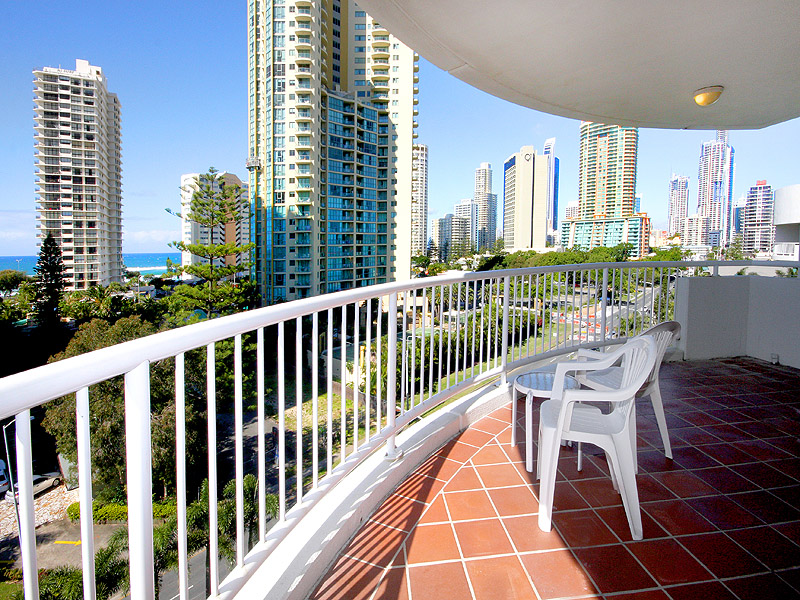
If you’re travelling to the Gold Coast then I recommend a two-bedroom suite at Australis Sovereign Hotel Surfers Paradise. This resort-style hotel, located on Ferny Avenue, is ideal for families, as it’s close to the beach and within easy walking distance of Cavill Avenue shopping strip.

0003

The two-bedroom suite consists of two separate hotel rooms with their own adjacent doors off a small entrance way, accessed by a separate door from the hallway.  This gives added privacy and you can wedge the individual room doors open – so you don’t have to leave your room and go into the public hallway to knock on the teen’s door to give them the inevitable hurry-up.

1 Bedroom Suite Lounge 2

The décor is not designer chic, but definitely comfortable and family-friendly. Both rooms are self-contained, with their own bathrooms (a plus with teenage girls) with Peter Morrissey toiletries. There are tea and coffee making facilities, iron and ironing board (as if the kids will use that!) and television with pay per view movies and Foxtel. There’s also high-speed Wi-fi – the first thing phone-addicted teens look for – a blessing or a curse, depending on your attitude. (While the daily rate is not cheap at $19.95 the weekly rate of $49.95 is better value.)

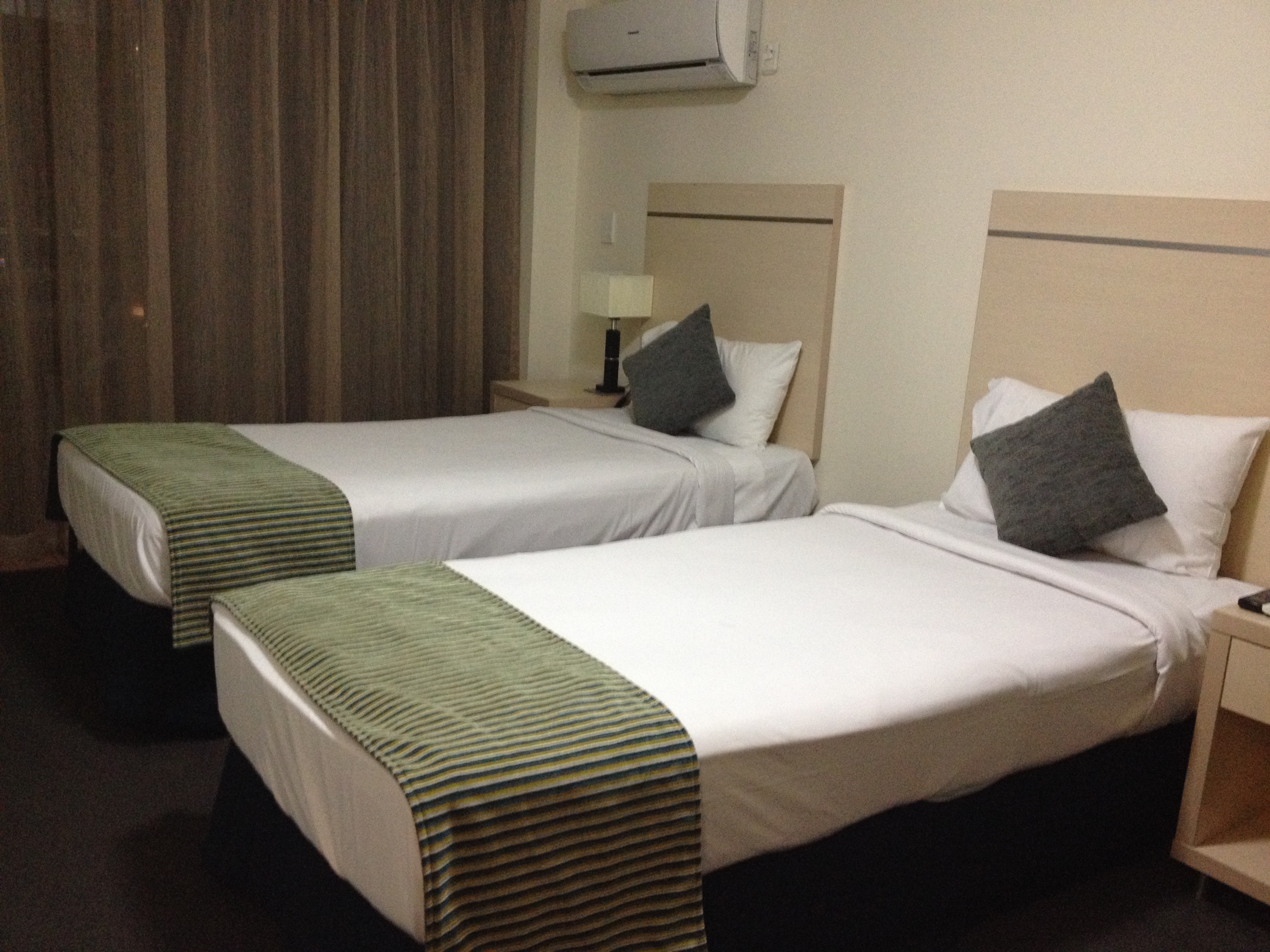
1 Bedroom Suite Bedroom 2

The larger of the two rooms is a generous size with a lounge area, dining table and kitchenette with dishwasher and microwave, while the bedroom has a queen-size bed.

photo 1

The second room is more typical hotel style, but also has a two-person dining table and chairs along with twin single beds. Both rooms have balconies with table and chairs, an essential feature for holiday accommodation in my book.

0080

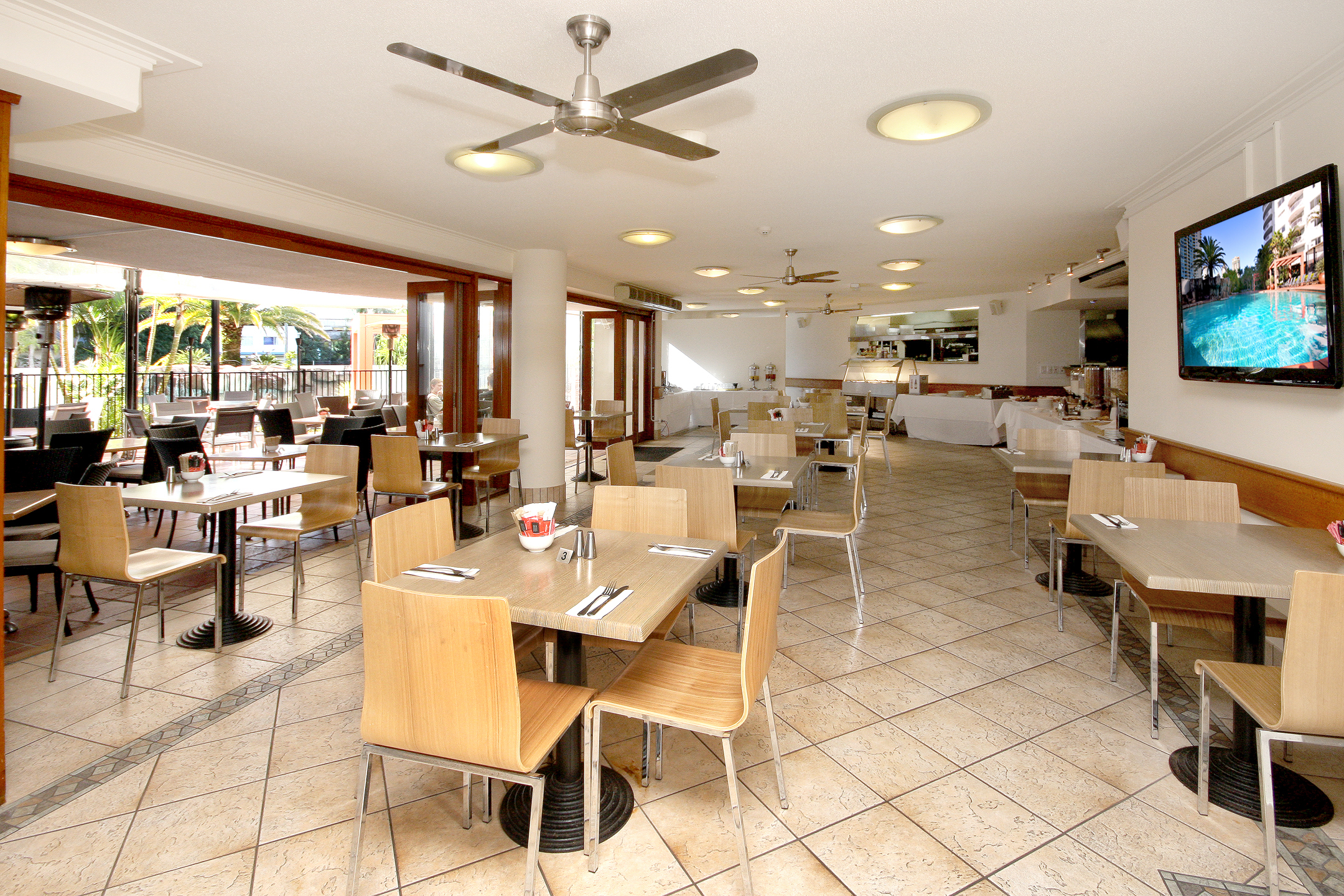
Flavours Restaurant and Bar is conveniently located next to the swimming pool and offers breakfast lunch and dinner, an easy option if you don’t want to prepare meals in the room.

Flavours Restaurant

A girlfriend and I recently stayed in the two bedroom suite (courtesy of Australis Hotels) while attending a conference on the Gold Coast. As we were both coming and going at different times the separate entrances worked well, as it meant we were not disturbing each other. Unfortunately, we were so busy at the conference I didn’t get to try out the restaurant or the pool!

My twin room could have done with another power point, ideally near the table, as the one for the kettle was so close to the shelf above I couldn’t fit my fancy 4-USB power charger in it, and the shower lacked a soap holder. But these are minor quibbles and overall the two-bedroom suite suited us perfectly and would also work well for two couples (and be a bargain with a starting price from $285 per night).

And it’s ideally suited to teens. They will feel like they have a room of their own – and you won’t have to trip over their mess on the floor.

Australis Sovereign Hotel
138 Ferny Avenue, Surfers Paradise
Tel: +61 7 5579 3888 or 1300 272 132
Email: reservations.sovereign@australishotels.com
www.silverneedlehotels.com/australis/surfers-paradise-sovereign


Posted in Accommodation, Australia, Gold Coast, Queensland, Travel | Tagged , , , , , , , | 2 Comments

Au naturel is best – please don’t wrap hotel soap

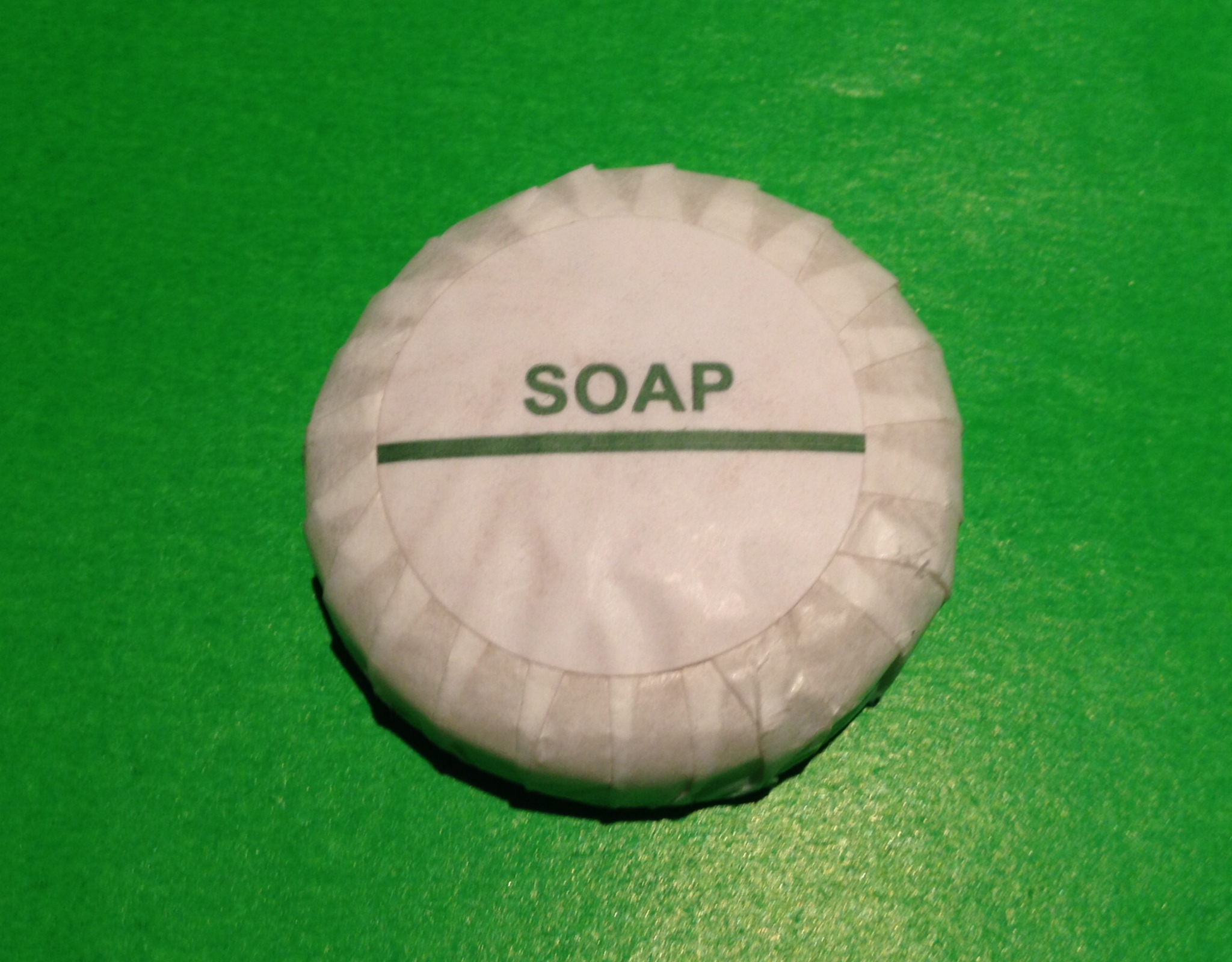
Pleated paper-wrapped soap

Pleated paper-wrapped soap

Ok, I’ll be upfront, this post is a rant about a first world problem, so if you don’t care if hotel soap comes wrapped, sometimes multiple times, then you might want to switch off now.

I just don’t see why the small soaps that appear in hotel bathrooms have to be wrapped at all. I understand in a lot of cases they carry the hotel brand or manufacturer’s logo, but sometimes they don’t, like this pleated wrap that just says ‘soap.’

And I especially can’t understand why they need to have more than one wrapping. Really?

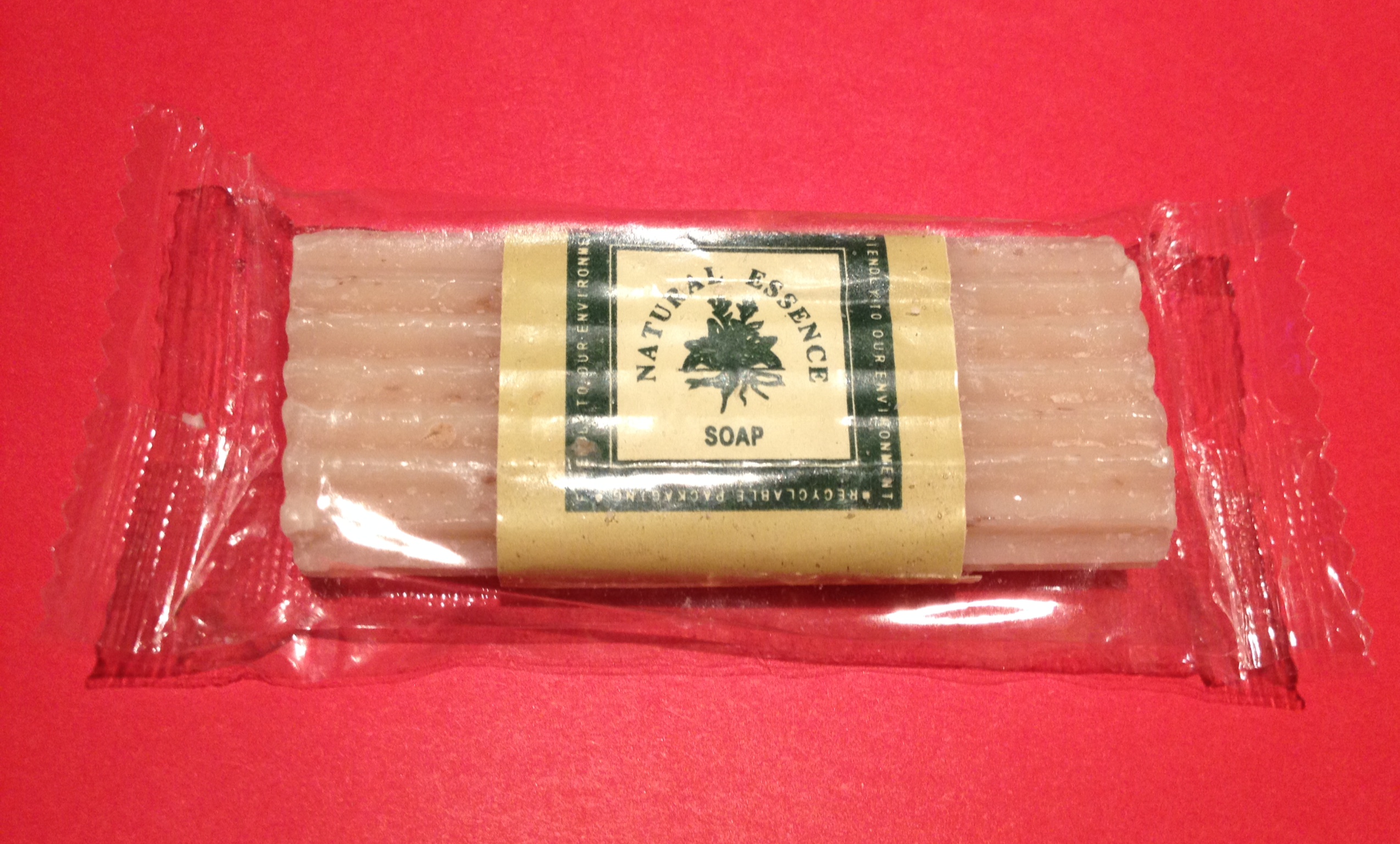
Paper and cellophane-wrapped soap

Paper and cellophane-wrapped soap

This double wrapped soap says the packaging is recyclable, which is good to know, except in a hotel bathroom all rubbish goes into the one receptacle, and I’m pretty sure busy housekeepers don’t fossick through bathroom bins to separate rubbish from recyclables, which kind of defeats the point.

So why am I ranting on about wrapped soap? Because apart from creating unnecessary rubbish, they can be infuriatingly difficult and time consuming to unwrap, especially when you’re in a desperate hurry, and worse, when your hands are already wet.

As a travel writer I often arrive at a hotel and have 10-15 minutes to ‘refresh’ in my room before my next meeting or outing. Before I disturb anything, including the bathroom towels, I need to take photos; of the room, the balcony, the view, first with my SLR camera for publication quality images, then again with my phone for quick upload to social media.

After all this there is often only a few minutes left for a bathroom visit. So I’m usually rushing out of the toilet and thrusting my hands under the tap before noticing the soap is wrapped. And if soap is hard to unwrap with dry hands, it’s near impossible with wet hands.

You can’t get your fingernail under the stickers that cinch paper wrappings and cellophane ones slip through your fingers. Like airline nut packets, you can’t find the exact spot to tear the crimped edge variety or after much violent wrenching the soap catapults out and disappears into the tissue box.

Recently at one up-market hotel in Thailand I had to break into the opaque plastic packaging using my teeth, only to find the beautiful two-toned soap inside was shrink-wrapped as well! Cue unprintable words.

Unwrapped soap at Peppers

Unwrapped soap at Peppers Airlie Beach

The thing is, all the other miniature bottled toiletries carry the hotel logo or cosmetic brand name, so there really is no need to put in on soap wrappers as well.

So you can imagine my unbridled joy when I rushed to the bathroom of my apartment at Peppers Airlie Beach, already running late for dinner, to find two lovely big bars of unwrapped soap.

So congratulations to Peppers on taking the initiative (and any other hotel chains out there also offering unwrapped soap). I appreciate the gesture, but more importantly, so does the environment.


Disclaimer: I stayed at Peppers Airlie Beach as a guest of Tourism Whitsundays.


Posted in Accommodation, Hotels, Travel | Tagged , , , , | 4 Comments

Funny dunny signs – quirky Aussie bathroom signs

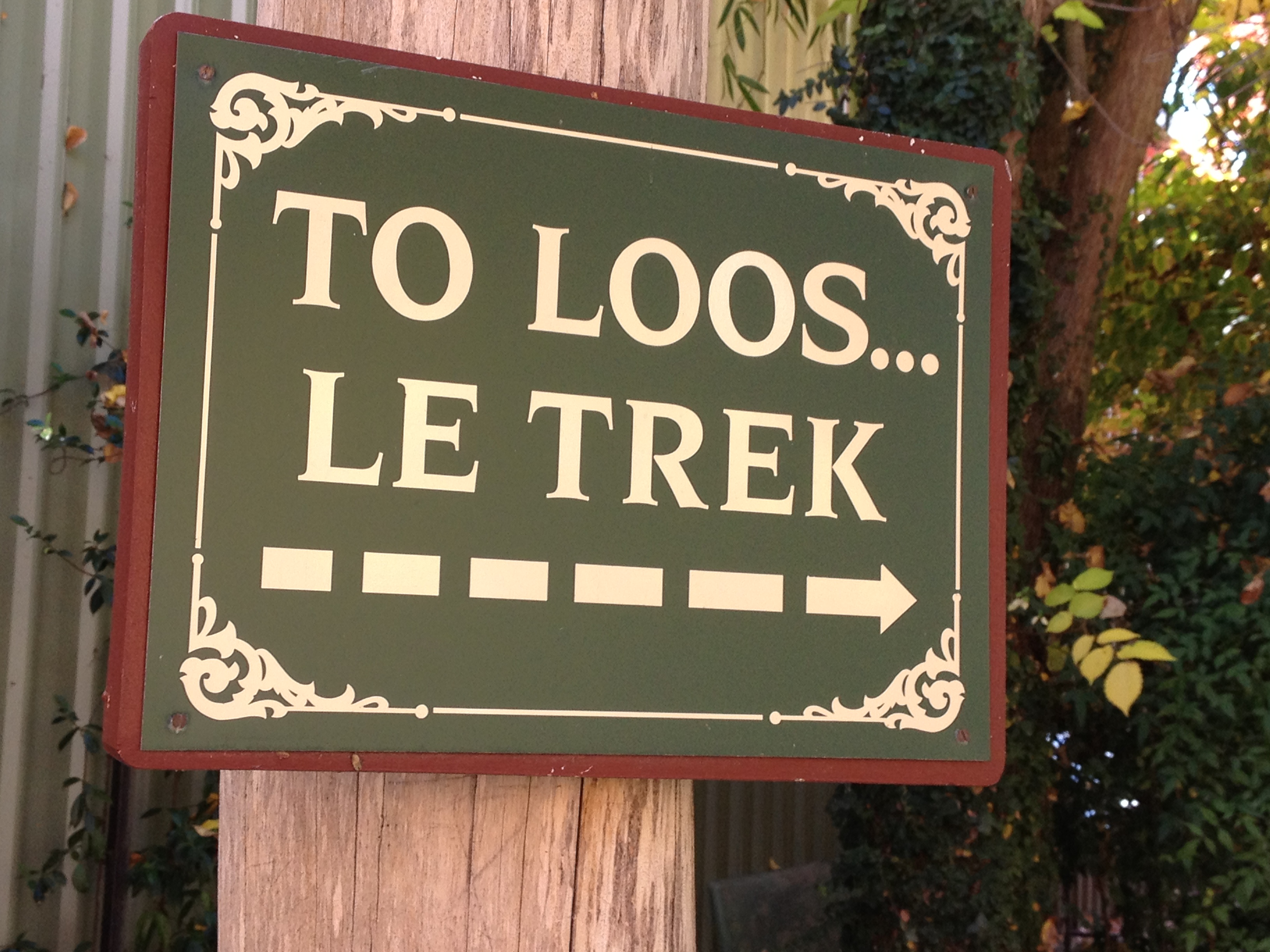
Sign pointing to the toilet at McCrossin's Mill Museum, Uralla, Australia

Sign pointing to the toilets at McCrossin’s Mill Museum, Uralla, Australia

When travelling it can be the quirky little things that give an insight into the character of a place – like unusual toilet signs.

To Loos Le Trek is a case in point, a hint that McCrossin’s Mill Museum in the small town of Uralla, Australia, doesn’t take itself too seriously. (A play on Toulouse Lautrec for any of you who are still scratching your head.)


Toilet signs in outback New South Wales

Toilet signs in outback New South Wales


In fact some toilet signs can be downright hilarious, like the Flip Dry and Drip Dry ones I came across at some showgrounds in outback New South Wales.

There are some equally funny dunny signs in the little book titled Bathroom Signs, authored by I.P. Daily (I kid you not).

Sign for a French urinal from the book Bathroom Signs by I.P. Daily

Sign for a French urinal from the book Bathroom Signs by I.P. Daily

When travelling in France I used to think a colleague was taking the piss out of me, so to speak, when he said he was going to the ‘pissoir’, but there is a picture in the book of a pretty tiled sign reading le pissoir. Apparently they are public urinals erected (pardon the phrase) to combat street urination.


One of my fears when travelling in a non-English speaking country is making a faux pas by going into the wrong toilet. (This comes after the more debilitating fear of not finding a toilet fast enough when I feel earthquake style rumbles overtaking my gut.) And it’s not just a matter of learning the simple translation for ‘men’ and ‘women’.

Think about it; in English we have Ladies & Gents (or Gentlemen) Women & Men, Male & Female, His & Hers, Boys & Girls, and in Australia Sheilas & Blokes. So you can see how confusing it might be for non-English speaking visitors to Australia. (Thanks to fellow travel writer John Maddocks for the picture below taken on a cattle station not far from Uluru.)

Photo courtesy of John Maddocks

Sheilas and Blokes photo courtesy of John Maddocks

That’s why I like toilet signs with images, but sometimes even those can be a little confusing, as I found recently at a resort in Thailand (and I wasn’t the only one).

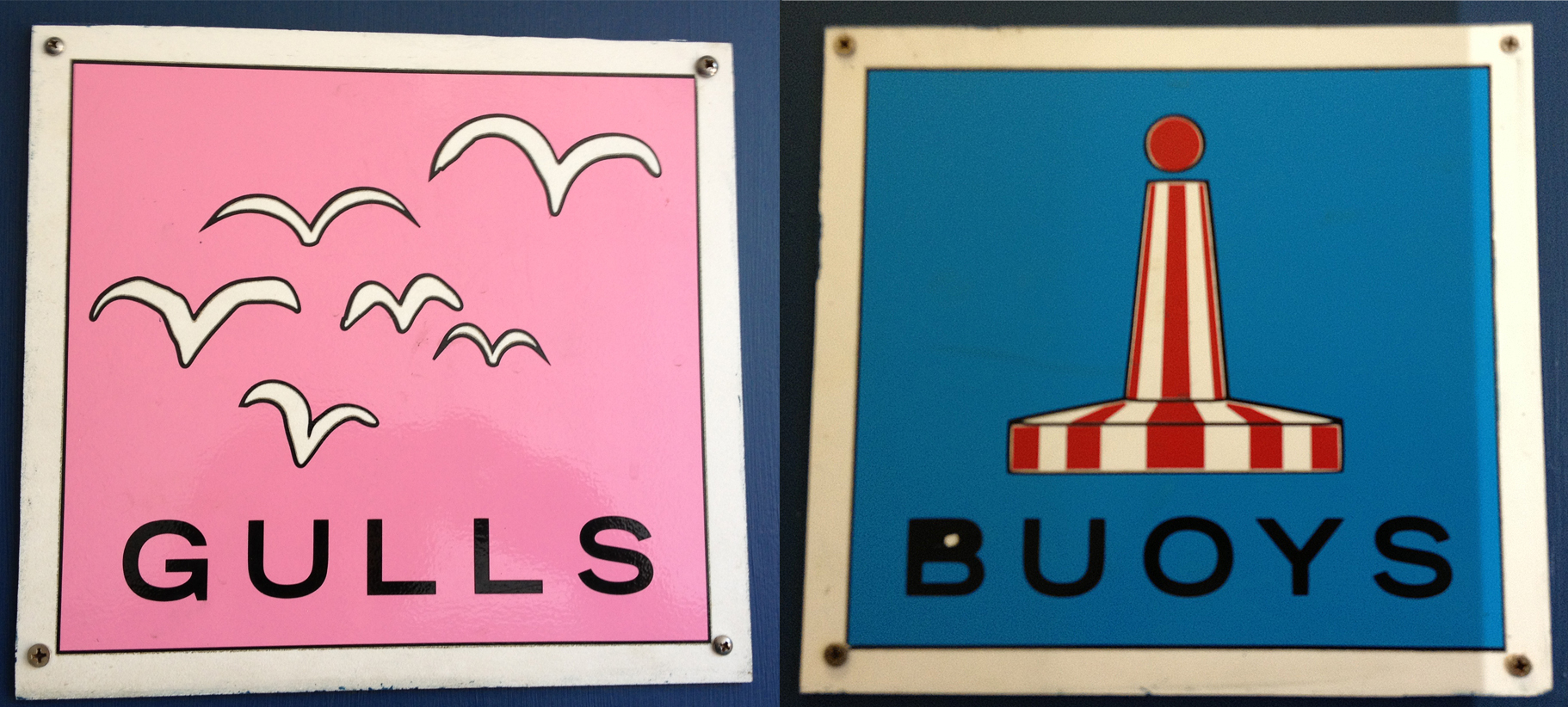
While the words Buoys and Gulls might not appear in an English travel phrase book, and these pictures are not much help (unless you are into phallic symbolism) at least the colours of the signs hint at which is which.

Toilet signs at marina

Toilet signs at Quays Marina, Pittwater

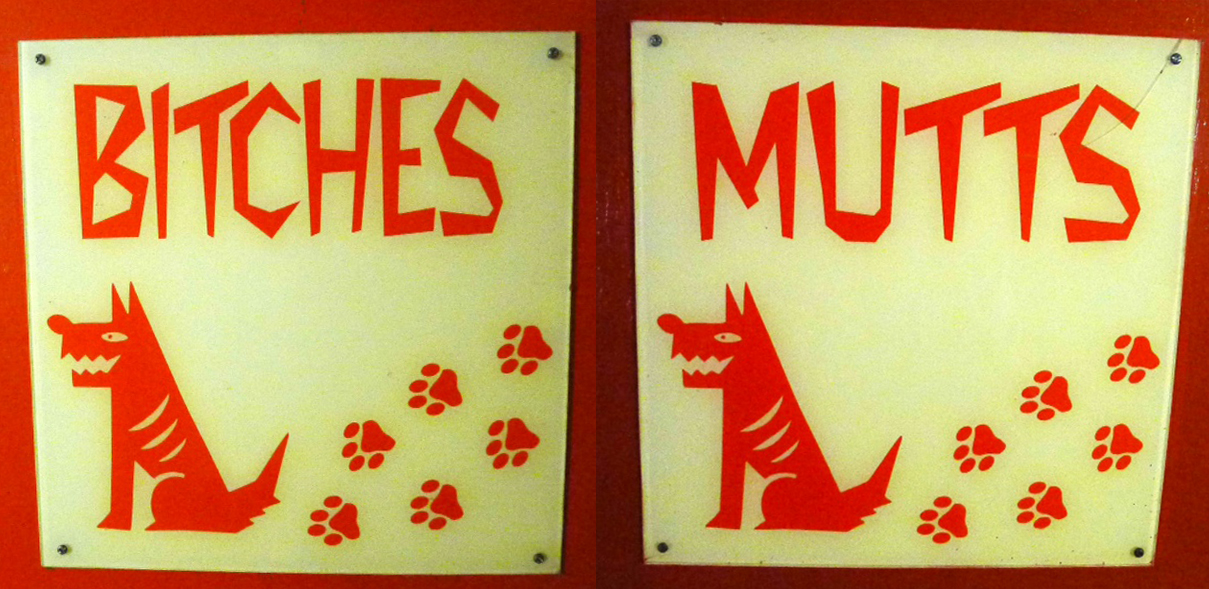
But the matching Bitches and Mutts signs in the Dingo Bar at the Kingfisher Bay Resort on Fraser Island, Queensland, don’t give much away if you don’t understand the terminology (a reference to the wild dogs or dingoes found on Fraser Island).

Signs in the Dingo Bar at the Kingfisher Bay Resort, Fraser Island, Australia

Signs in the Dingo Bar at the Kingfisher Bay Resort, Fraser Island, Australia. Photos courtesy Jodi Clark

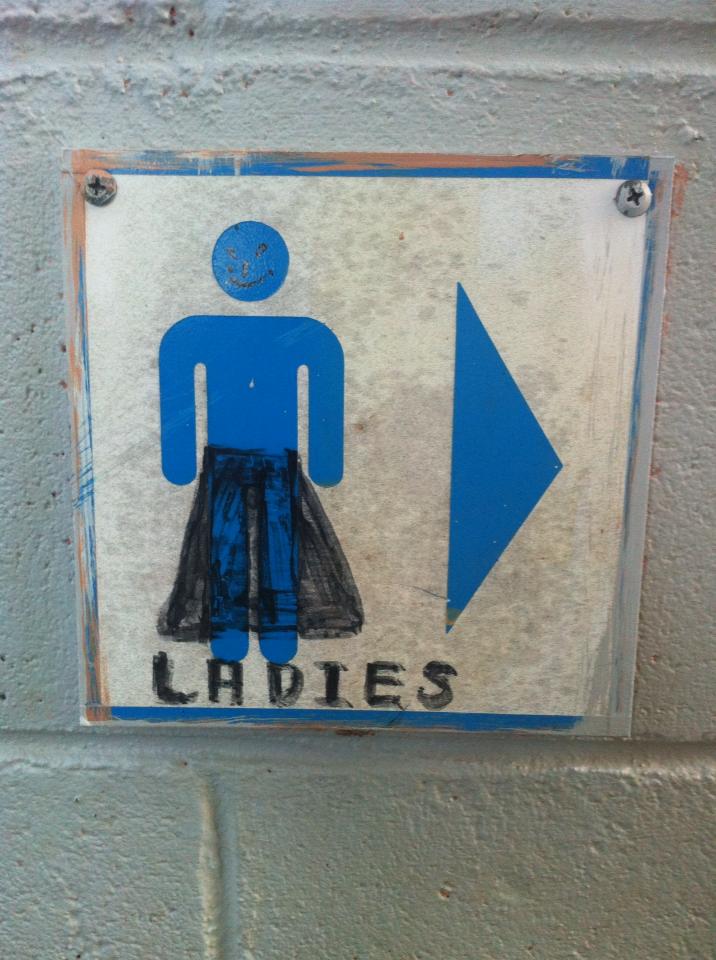
Even when there are very clear images, you can still get caught out by a bit of gratuitous graffiti, like that found at this toilet in Gympie, as captured by friend Jodi Clark.

Toilet sign in Gympie Photo courtesy Jodi Clark

Toilet sign in Gympie Photo courtesy Jodi Clark

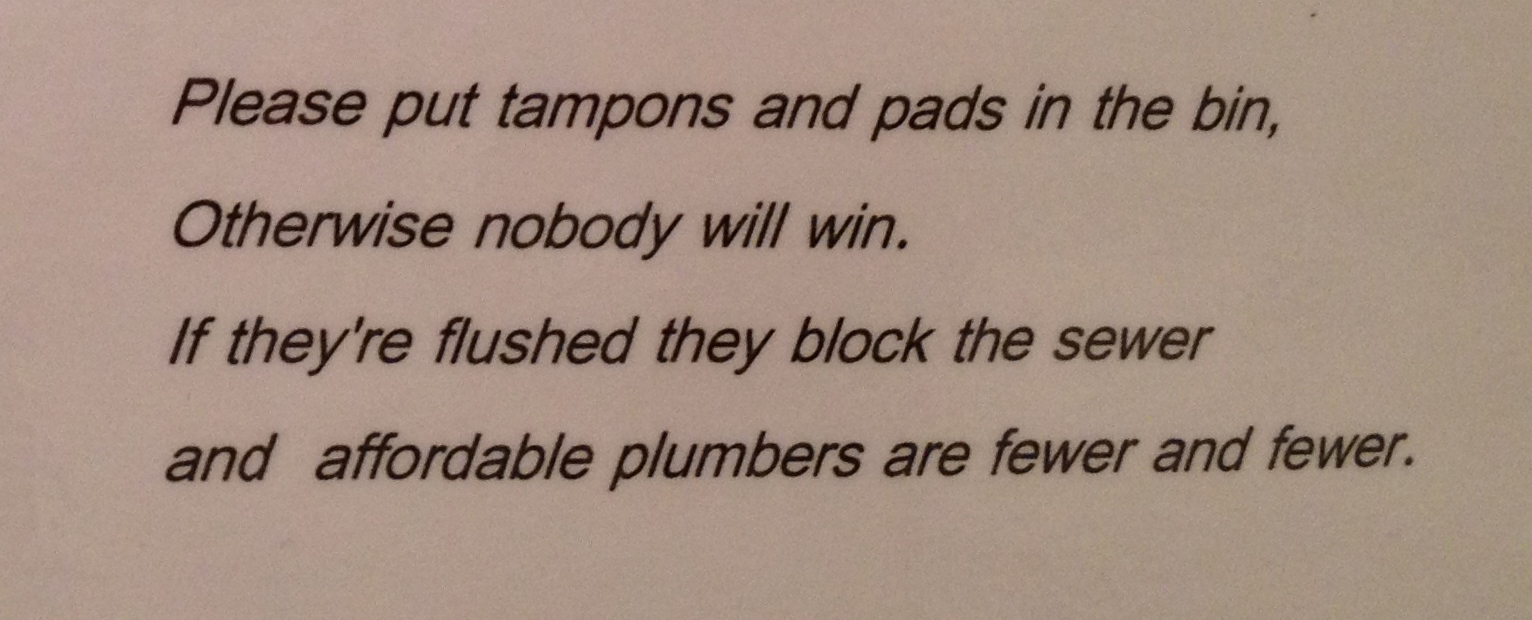
Toilets seem to inspire poets too, who try to win our cooperation with witty ditties.

Toilet poetry in the bowling Club on Dangar Island

Toilet poetry in the Bowling Club on Dangar Island

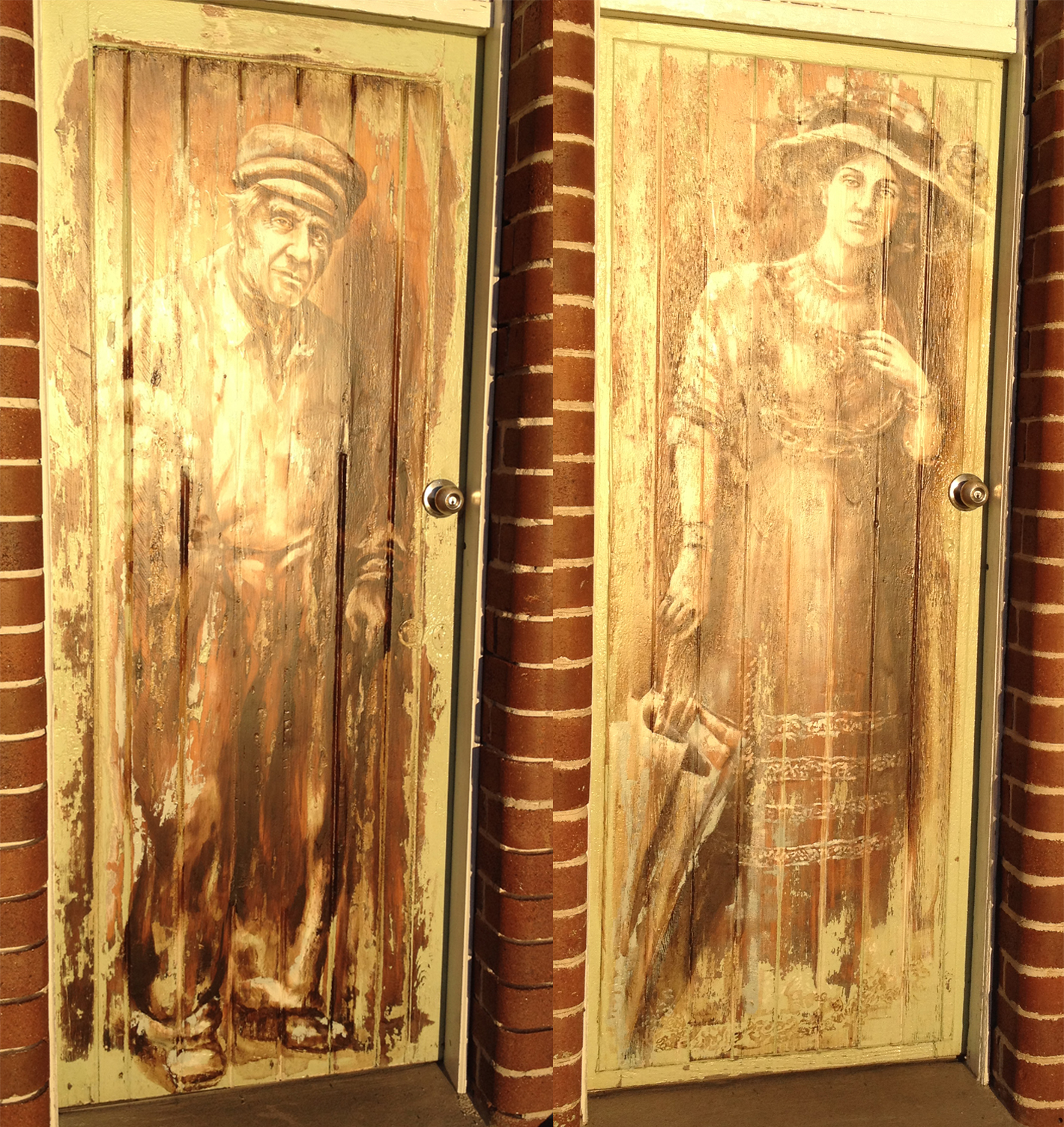
Then there are toilet signs that are artworks in their own right, like these beautiful examples at the Quarantine Station wharf, Sydney, which show quite clearly which loo is which.

Toilet doors at Quarantine Station wharf, Sydney

Toilet doors at Quarantine Station wharf, Sydney

Do you have any funny toilet images to share? I’d love to see them.

Posted in Australia, Travel | Tagged , , , , , , | 1 Comment

Escape Hunt in Sydney – if you dare

We’re locked in. It’s pitch black. I have no idea how we’ll get out. And I’m scared.

Scared I won’t be able to find the clues or solve the riddles that will help us unlock the door, and along the way, solve the mystery of who committed the murder in this Asian home.

The friendly staff at Escape Hunt Bangkok

The friendly staff at Escape Hunt Bangkok

We’re at Escape Hunt Bangkok, currently ranked the number one attraction on TripAdvisor in Bangkok.

I’m locked in the darkened room with three colleagues and we are racing against time – and four colleagues locked in an identical room next door.

We are playing the role of detectives (Sherlock Holmes-style) to solve a murder set in a Bangkok home about 100 years ago. We need to work together if we are going to beat our mates next door. But we don’t know where to start.

Thankfully, things look a lot brighter, literally, when I solve our first problem, which also boosts my confidence – at least I won’t be a completely useless member of our team.

Escape Hunt is an indoor adventure based on popular ‘escape the room’ online games. (And in Bangkok it’s an opportunity to escape the heat for a while.) With enthusiastic multilingual staff the game is explained to us in English.

Basically, we have to work together to find clues and solve puzzles that will help us find keys and work out padlock combinations, which, of course, unlock more clues. It involves observation, critical thinking and problem solving skills. It’s a race against the clock if you are playing by yourselves, or a race to beat another team if you are playing with a second group.

As the website says, “It’s exciting, challenging, addictive, educational and above all, fun!”

And the good news is, Escape Hunt is opening in Sydney on 15th August 2014.

In Sydney the mysteries are based in the historic Rocks area, “where crime was rife and mysteries lurked around every corner.”

So take your family, friends or colleagues and be some of the first in Sydney to ‘escape’.

Our two teams playing dress-ups after our game.

Our two teams playing dress-ups after our game.

If you get really stuck, you can ask the staff for hints. But every clue they give will cost you one minute of time.

We burst out of our room in Bangkok just before the hour is up, only to find our gloating mates waiting for us outside. However, they were penalised two minutes for clues, so on adjusted time we won – without assistance. Look who’s grinning now.

Hint: beware of the odd red herring.


Anyone done the Escape Hunt Experience in any other city?

The Escape Hunt Experience Sydney.

Check out the Escape Hunt Facebook Page for opening specials.

Posted in Attractions, Australia, Sydney, Travel | Tagged , , , , , | 4 Comments

Trek with Camels for Drought Relief

Camels were used as transport to colonise outback Australia

Camels were used as transport to colonise outback Australia

How about this for getting away from it all – join a camel trek from Alice Springs to Port Augusta – and raise money for drought relief by tagging along.

I’ve recently come back from the Uluru Outback Fest, in Australia’s Northern Territory. It’s a fabulous weekend combining dining experiences in the desert, interpretive tours of Uluru, or Ayers Rock, and the main event, camel racing, which is where I heard about Camels for Drought Relief.

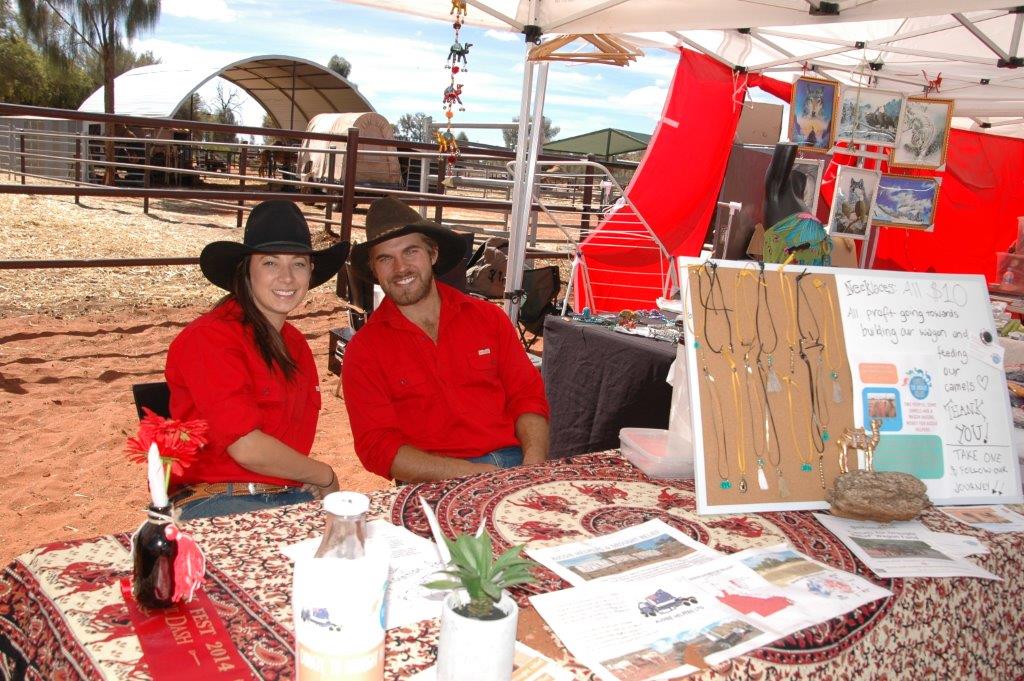
The Camel Cup is held at Uluru Camel Farm and on race day there are stalls set up around the racetrack. It was at one of these stalls I met the lovely Hannah Purss. Between racing camels she was taking donations for drought relief and selling jewellery she’d made to help fund the project Camels for Drought Relief.

Shocked at the plight of farmers suffering from the worst drought in Australian history, Hannah, together with her boyfriend Evan Casey, decided to do something about it.

Hannah and Evan at the Uluru Camel Cup

Hannah and Evan at the Uluru Camel Cup

Hannah, originally from Sydney, and Evan, from South Australia, have been working with camels in the Australian outback for a number of years, training, riding and racing them, so the idea to use camels to raise awareness of drought-plagued farmers seemed like a good idea (at the time).

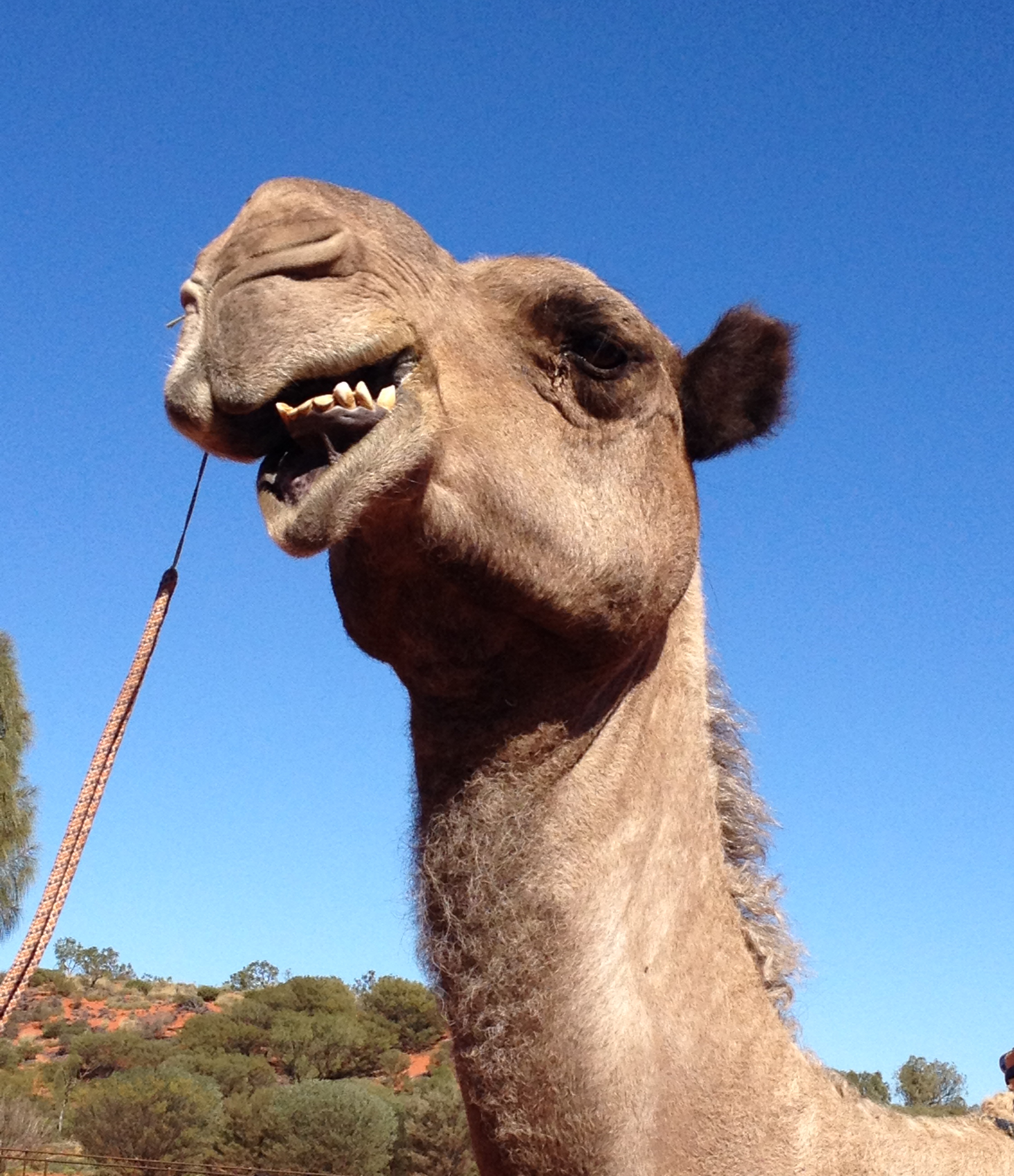
Camels were introduced into Australia in the 1800s for transport during colonisation because of their ability to withstand the harsh outback conditions. With the advent of motorised transportation, camels were no longer needed and released into the wild. It’s estimated the feral population grew to one million before culling was introduced to prevent them from degrading the environment and threatening native species.

Most of Australia's camels are dromedaries (one-humped camels)

Most of Australia’s camels are dromedaries (one-humped camels)

As camels were used to help build the outback, Hannah and Evan decided to use them to help rebuild it, via funds raised from a camel trek.  On reflection, Hannah says they probably didn’t think it through too much, but they have persevered.

They caught three wild camels at Mulga Park Station in late 2013 and have been training them ever since. Hannah describes Timmy, Crixus and Hugo as “enormous hairy beasts with big hearts to match”.

Hannah and Evan are funding the trek themselves and in order to save money  have moved into a tent. They’ve been building the wagon they’ll use from recycled materials, mostly found at the Uluru dump. Evan is currently making some last-minute improvements before the trek commences on July 13 from the Lasseters Camel Cup in Alice Springs.

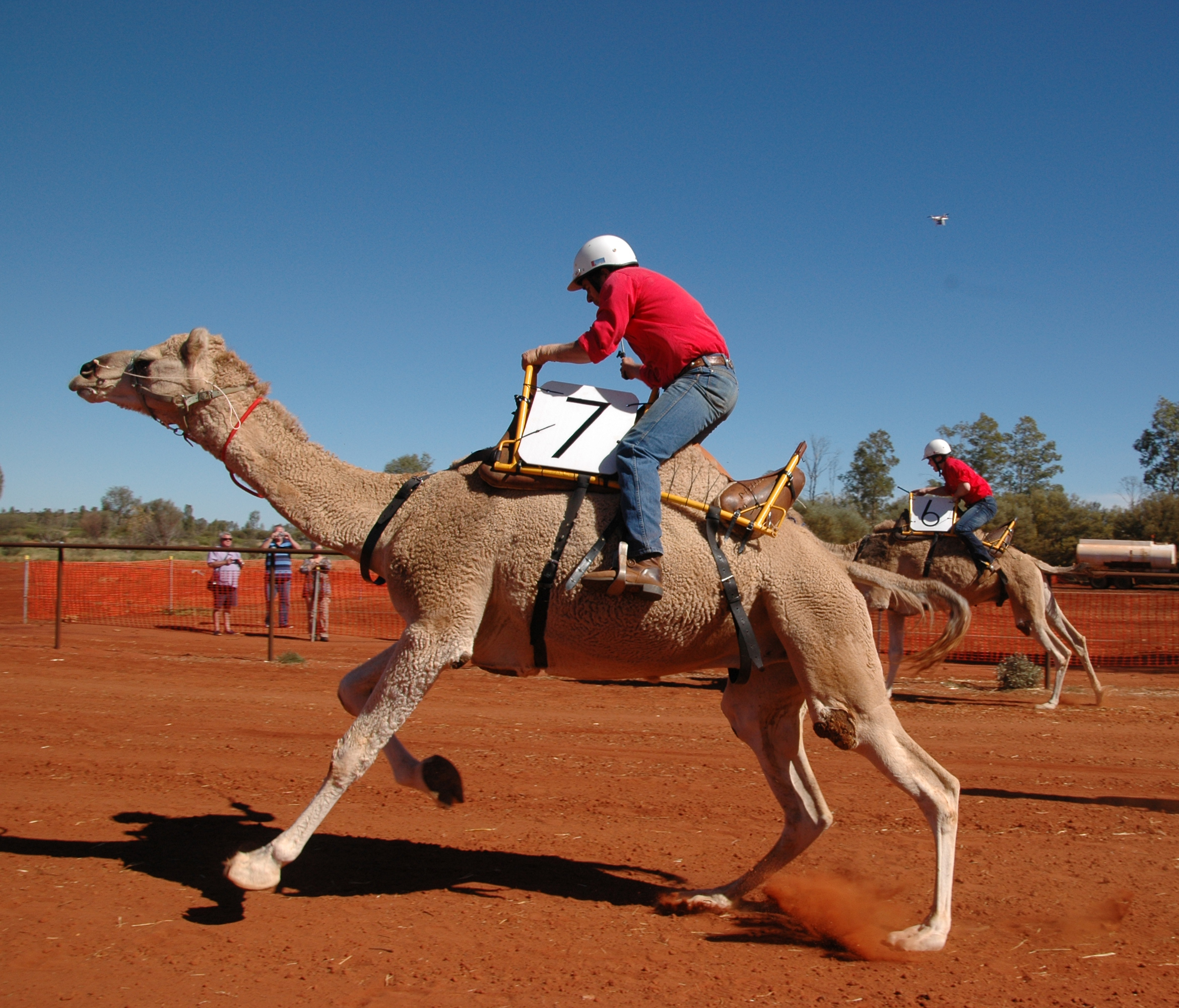
A camel in full flight at the Uluru camel Cup

A camel in full flight at the Uluru camel Cup

They’ll be on the road for more than three months, and you can join them for part of the trek between Alice Springs and Finke. (They are offering transport from Uluru or Alice Springs to their location.)

It’s an awesome way to see the outback – sleeping under the stars, eating around a campfire, travelling in an eco-friendly way and in great company. And you’ll be helping raise money for our farmers. You can even get your friends to sponsor you to help raise further funds.

If you can’t make the trek, you can still donate to Camels for Drought Relief through their link at Everyday Hero. If you’d like to help fund their trip (they still need to buy medical supplies, camp supplies etc) you can do so through Go Fund Me.

It’s a fantastic initiative by two young Australians to give back to the country and I applaud them for their effort and hard work. Well done Hannah and Evan and good luck!

For more details visit Camels for Drought Relief or follow them on FacebookTwitter and Instagram.

More: Voyages Ayers Rock Resort

You can read about my time at the Outback Fest in an up-coming article in Escape travel.


Posted in Animals, Australia, Northern Territory, Outback, Travel, Travel News & Events | Tagged , , , , , , , , | Leave a comment